Gen Zers want to be doctors — but only if it makes them rich
 Manisha Krishnan
Mar 20, 2025, 4:22 AM ET
Growing up with a cardiologist dad, Anna always knew she wanted to become a doctor. She had watched her father spend decades building trust with his patients so he could care for them, and she wanted to have that kind of impact.
"I went into medical school thinking I'm going to specialize," says Anna, a 27-year-old in her fourth year as a medical student at Georgetown University. "I thought the best and the smartest pick something specific so that they can really master it."
But after completing her third-year rotations, she found she most enjoyed family medicine — where she could focus on caring for patients long term. But at a school that's mostly focused on specialties, her interest wasn't well received.
"People would say, 'Oh, wow, you're such a competitive applicant. You could do anything you want. Why family med?'" says Anna, who asked to use just her first name to avoid professional backlash. "It made me think I wasn't reaching my full potential."
Like Anna, a lot of Gen Zers want to be doctors — a survey last year found a rising interest in healthcare work among high-achieving high school students, and the number of med students has grown by 17% in the past decade. As boomers get older and AI upends white-collar work, this is really good news. The Bureau of Labor Statistics forecasts that we will need far more people working in healthcare over the next decade. And the National Center for Health Workforce Analysis predicts a shortage of about 87,000 family doctors by 2037, a problem exacerbated by an aging doctor workforce and increasing demand for elder care.
But each year, hundreds of medical residencies for primary care programs struggle to find students, and many who enter the field end up abandoning it. Across the medical field, people look down on primary care work — which includes family medicine, internal medicine, pediatrics, OB-GYNs, and geriatrics — because it doesn't pay as well, is an administrative slog, and isn't considered as prestigious as other specialties. There's even a term for the bad-mouthing of primary care: specialty disrespect. Georgetown notes a study that found it could affect up to 80% of students, particularly those considering going into primary care.
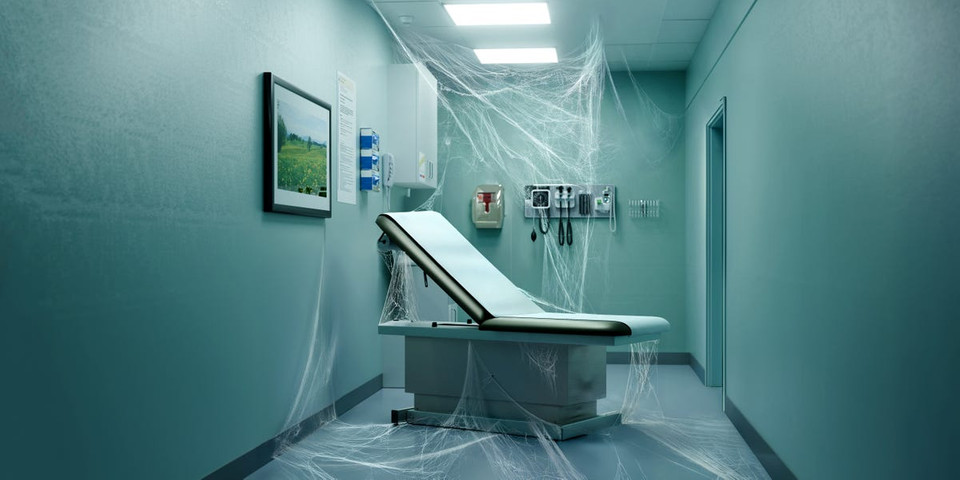
That's leaving Americans without enough doctors to go around.
Manisha Krishnan
Mar 20, 2025, 4:22 AM ET
Growing up with a cardiologist dad, Anna always knew she wanted to become a doctor. She had watched her father spend decades building trust with his patients so he could care for them, and she wanted to have that kind of impact.
"I went into medical school thinking I'm going to specialize," says Anna, a 27-year-old in her fourth year as a medical student at Georgetown University. "I thought the best and the smartest pick something specific so that they can really master it."
But after completing her third-year rotations, she found she most enjoyed family medicine — where she could focus on caring for patients long term. But at a school that's mostly focused on specialties, her interest wasn't well received.
"People would say, 'Oh, wow, you're such a competitive applicant. You could do anything you want. Why family med?'" says Anna, who asked to use just her first name to avoid professional backlash. "It made me think I wasn't reaching my full potential."
Like Anna, a lot of Gen Zers want to be doctors — a survey last year found a rising interest in healthcare work among high-achieving high school students, and the number of med students has grown by 17% in the past decade. As boomers get older and AI upends white-collar work, this is really good news. The Bureau of Labor Statistics forecasts that we will need far more people working in healthcare over the next decade. And the National Center for Health Workforce Analysis predicts a shortage of about 87,000 family doctors by 2037, a problem exacerbated by an aging doctor workforce and increasing demand for elder care.
But each year, hundreds of medical residencies for primary care programs struggle to find students, and many who enter the field end up abandoning it. Across the medical field, people look down on primary care work — which includes family medicine, internal medicine, pediatrics, OB-GYNs, and geriatrics — because it doesn't pay as well, is an administrative slog, and isn't considered as prestigious as other specialties. There's even a term for the bad-mouthing of primary care: specialty disrespect. Georgetown notes a study that found it could affect up to 80% of students, particularly those considering going into primary care.
That's leaving Americans without enough doctors to go around.