Myanmar’s Rohingya on Aung San Suu Kyi: ‘She was a rag doll without total power’
 Saturday 08 March 2025 05:37 GMT
I would like to be emailed about offers, events and updates from The Independent. Read our privacy policy
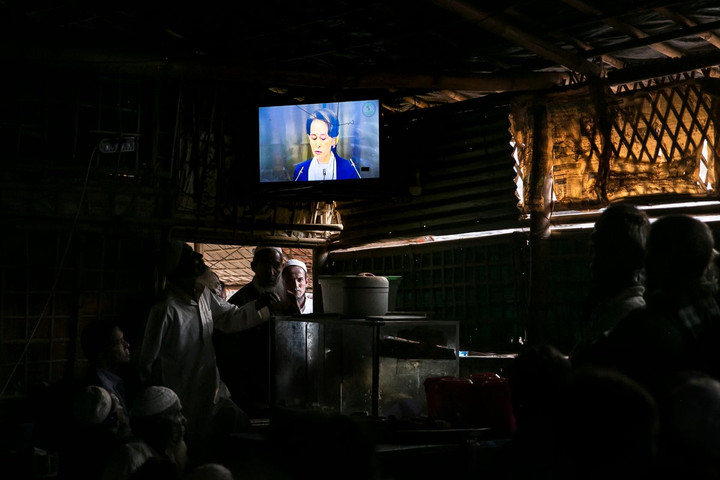
Sitting in a dimly-lit bamboo shelter in the world’s largest refugee camp, Rohingya Muslims like Azizur Rehman could be forgiven for hating Aung San Suu Kyi.
Five years ago, the then-leader of Myanmar appeared at the International Court of Justice to deny the Rohingya were victims of genocide by her country’s military, much to the shock of the rest of the world.
Yet Rehman, 34, speaks enthusiastically from Cox’s Bazar in Bangladesh about the now jailed Myanmar leader and her father General Aung San, Myanmar's independence hero, who in 1946 declared that Myanmar’s citizens “will live together and die together” and assured full rights and privileges for the Rohingya. One year later, he was assassinated.
“I don’t think she (Suu Kyi) is the real enemy of the Rohingya,” he tells The Independent. “She was just a rag doll who never had absolute power.”
Instead he blames the army itself and the Mogh Baghi – a common term used by refugees for the Arakan Army, the most powerful Buddhist rebel group in Myanmar accused of forcefully displacing tens of thousands of Rohingya.
“I don’t know if I, or the tens of thousands of people like me, will ever return to Burma. But I believe Aung San Suu Kyi’s release from detention could awaken her conscience and give her a chance to redeem herself for not speaking up for the Rohingya when she was in power.”
Rehman, who fled Rakhine State during the 2017 mass exodus, now works as a community leader in the camp, helping those who continue to flee war and destruction since General Min Aung Hlaing led a military coup that overthrew Suu Kyi’s democratically elected government in February 2021.
As Myanmar plunges deeper into civil war under military rule, Rohingya refugees like Rehman are reassessing their views on the jailed leader.
Saturday 08 March 2025 05:37 GMT
I would like to be emailed about offers, events and updates from The Independent. Read our privacy policy
Sitting in a dimly-lit bamboo shelter in the world’s largest refugee camp, Rohingya Muslims like Azizur Rehman could be forgiven for hating Aung San Suu Kyi.
Five years ago, the then-leader of Myanmar appeared at the International Court of Justice to deny the Rohingya were victims of genocide by her country’s military, much to the shock of the rest of the world.
Yet Rehman, 34, speaks enthusiastically from Cox’s Bazar in Bangladesh about the now jailed Myanmar leader and her father General Aung San, Myanmar's independence hero, who in 1946 declared that Myanmar’s citizens “will live together and die together” and assured full rights and privileges for the Rohingya. One year later, he was assassinated.
“I don’t think she (Suu Kyi) is the real enemy of the Rohingya,” he tells The Independent. “She was just a rag doll who never had absolute power.”
Instead he blames the army itself and the Mogh Baghi – a common term used by refugees for the Arakan Army, the most powerful Buddhist rebel group in Myanmar accused of forcefully displacing tens of thousands of Rohingya.
“I don’t know if I, or the tens of thousands of people like me, will ever return to Burma. But I believe Aung San Suu Kyi’s release from detention could awaken her conscience and give her a chance to redeem herself for not speaking up for the Rohingya when she was in power.”
Rehman, who fled Rakhine State during the 2017 mass exodus, now works as a community leader in the camp, helping those who continue to flee war and destruction since General Min Aung Hlaing led a military coup that overthrew Suu Kyi’s democratically elected government in February 2021.
As Myanmar plunges deeper into civil war under military rule, Rohingya refugees like Rehman are reassessing their views on the jailed leader.