Gas Planets In Our Solar System
 Everyday Human beings made new advancements and discoveries in Space explorations and we have succeeded to get to know our surrounding universe.Gas planets are more likely to complete their orbit around the sun faster then the solid planets and they are cold because they exist far from sun. Lets take a look on these planets one by one to understand them better.
Everyday Human beings made new advancements and discoveries in Space explorations and we have succeeded to get to know our surrounding universe. Our solar system consists of eight major planets that are orbiting around the sun including our Earth. After the discoveries made by space probes, telescopes and researches conduct by cosmologists and astronomers theories, it is revealed that not all planets in our solar system are solid and made with solid materials but they are made of gases such as helium and hydrogen with small rocky core. They are cold because they exist farther from the sun. They are much bigger in size then solid planets but it is impossible to land on these planets because they are just condensed gases.
There are four Gas giants in our solar system including Jupiter, Saturn, Uranus and Neptune. These planets are huge in mass andsize and exist in the form of giant gas balls. There is an asteroid belt between the orbits of Jupiter and Mars that act as a barrier and line between solid and gaseous planets. Gas planets are more likely to complete their orbit around the sun faster then solid planets. Lets take a look on these planets one by one to understand them better.
Everyday Human beings made new advancements and discoveries in Space explorations and we have succeeded to get to know our surrounding universe.Gas planets are more likely to complete their orbit around the sun faster then the solid planets and they are cold because they exist far from sun. Lets take a look on these planets one by one to understand them better.
Everyday Human beings made new advancements and discoveries in Space explorations and we have succeeded to get to know our surrounding universe. Our solar system consists of eight major planets that are orbiting around the sun including our Earth. After the discoveries made by space probes, telescopes and researches conduct by cosmologists and astronomers theories, it is revealed that not all planets in our solar system are solid and made with solid materials but they are made of gases such as helium and hydrogen with small rocky core. They are cold because they exist farther from the sun. They are much bigger in size then solid planets but it is impossible to land on these planets because they are just condensed gases.
There are four Gas giants in our solar system including Jupiter, Saturn, Uranus and Neptune. These planets are huge in mass andsize and exist in the form of giant gas balls. There is an asteroid belt between the orbits of Jupiter and Mars that act as a barrier and line between solid and gaseous planets. Gas planets are more likely to complete their orbit around the sun faster then solid planets. Lets take a look on these planets one by one to understand them better.
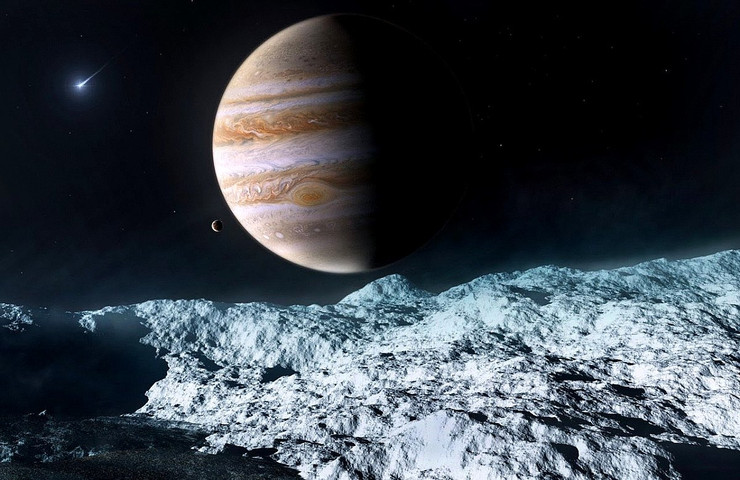
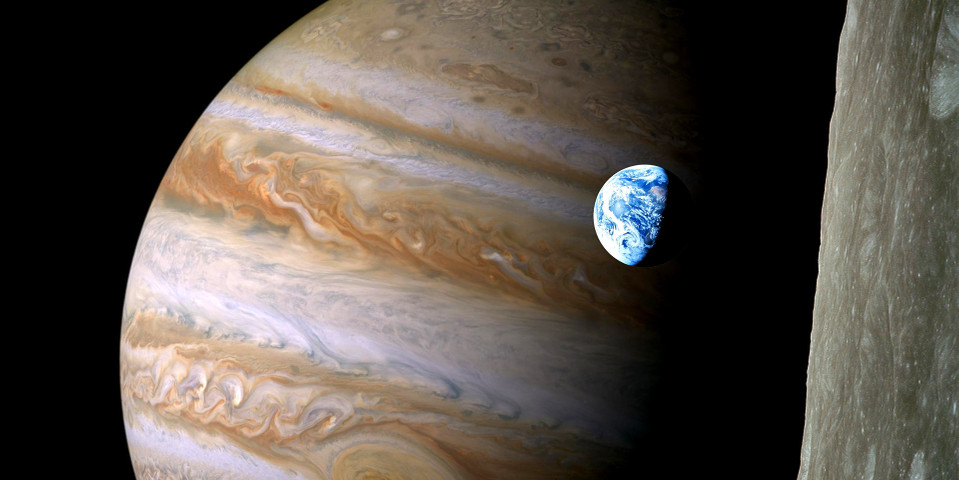
Jupiter
Jupiter is fifth and the largest planet of the solar system. It is the biggest Gas giant out of all four. The radius of Jupiter is 11 times and mass is 318 times bigger than Planet earth. Jupiter is known to grow bigger after swallowing most of its natural satellites. Jupiter had dozens of moon revolving around it and according to the discoveries made by probes and telescopes, there are total 79 moons that are yet discovered. Most of the planet’s bulk made from liquid metallic Hydrogen, that’s why Jupiter had powerful magnetic field that is almost 20,000 times stronger then Earth. There is famous great red spot on the surface of Jupiter that was discovered in 1996. It moves counter clockwise of the sun on the surface. It is the fastest spinning planet in solar system. One day on Jupiter is only 9 hours and 56 minutes long.
Saturn
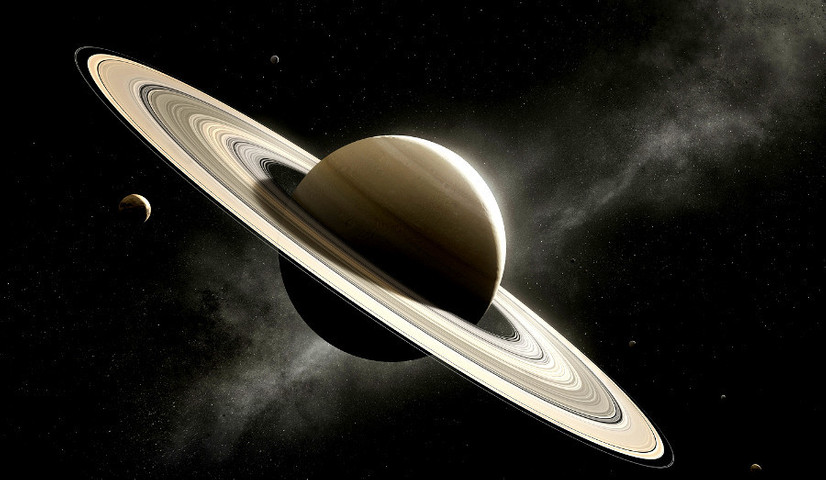
Saturn is Gas giant that is known for having the most spectacular, large, clear and beautiful rings around it. Saturn is nine times bigger than Earth. It is mostly made up of helium and hydrogen and it also had large number of moons. According to the discoveries there are total 82 moons of this planet that is the highest number of moons in Solar system. Ancient people observed it with naked eye. The upper atmosphere of Saturn is divided into the bands of clouds. Saturn is characterized by its rings and they consist million of particles of ice and cosmic dust. Saturn had the lowest density out of all other planets. It also had a rocky core that is made up of liquid metallic Hydrogen. One day on Saturn is 10 hours and 42 minutes long and it is also a fast spinning planet. There are also some theories that when thunderstorm react with methane in the air then it rain diamonds on Saturn. Although there is no proper evidence regarding this theory but diamond rain does sounds fascinating.
Uranus
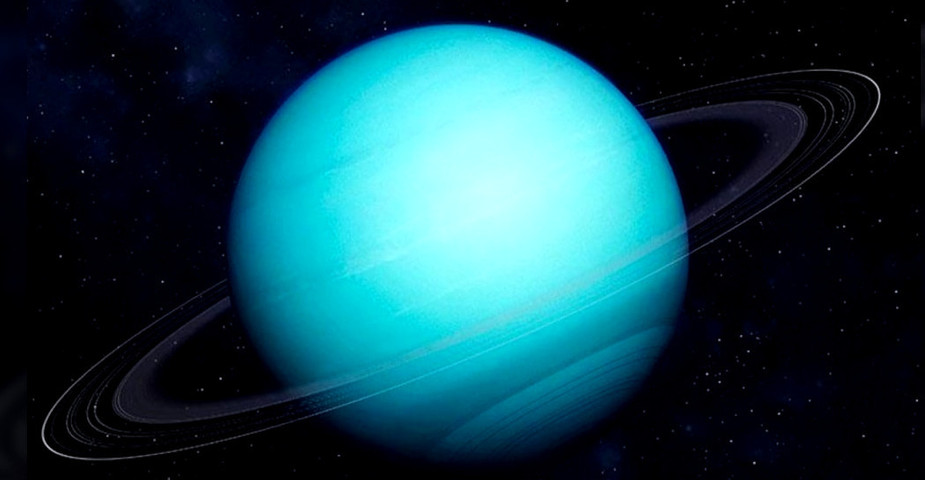
Uranus is the Third gas giant and seventh planet of the solar system. Due to the icy rocks and low temperature, Uranus is also known as Ice giant. It is four times bigger then Earth. Uranus is the first gas planet that was discovered with telescope. It is the only gas planet that had its equator at a right angel with its orbit. It is also known as blue planet because it appears deep blue due to the abundance of methane in its upper atmosphere. Uranus also had rings around it but they are dark and thin made up of dust and different particles. Uranus had 27 discovered moons yet and they are discovered by the space probe named voyager 2. Bigger gaseous planets are capable of holding more moons due to the strong magnetic and gravitational filed. Uranus is the coldest planet of the solar system with extremely low temperature. There is a tilt in the Uranus orbit that caused by collision with Earth sized object long ago. This unusual tilt causes extreme weather conditions and seasons. One day on Uranus is 17 hours and 14 minutes long.
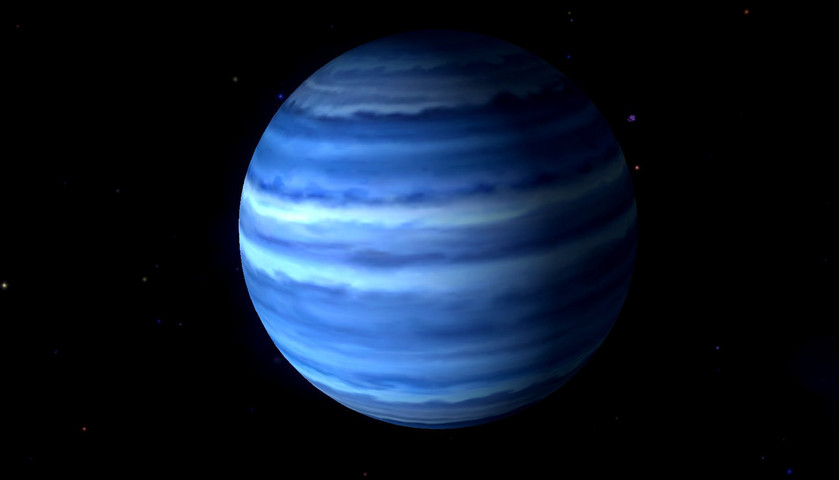
Neptune
Neptune is eighth planet of the solar system and it is almost 17 times bigger than Earth. Neptune is also characterized by its strong winds that can reach up to 2000 kilometer per hour, that is the fastest winds in solar system. It is also cold and icy planet that appears blue in color due to methane in atmosphere. Neptune also had rings just like all other gaseous planets but they are not very prominent and clear. Scientists saw the rings from near when Voyager 2 took clear images of the Uranus rings. There are 13 known moons of Neptune and the largest moon is known as Triton. It is also a famous planet because its existence was predicted by mathematical calculations by ancient people long ago before it is even actually seen and discovered. Neptune spin faster then Uranus and one day on Neptune is 16 hours and 6 minutes long.